Forward modelling#
Synthetic forward modelling with pycsamt.forward — computing
the electromagnetic response of a resistivity model you specify, with no
field data required. These examples build layered and gridded earth
models from scratch and run the 1-D, 2-D, and quasi-3-D solvers, which is
the natural way to design a survey, build intuition for what an anomaly
looks like in the data, or generate training targets for the
AI-inversion workflows.
The gallery reads as a workflow, simplest first:
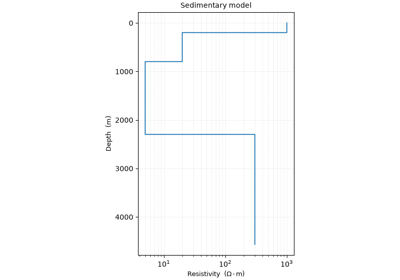
1-D layered models — resistivity–depth profiles and geology priors;
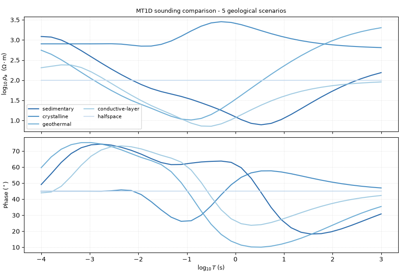
1-D soundings — MT, CSAMT, and TEM responses of those models;
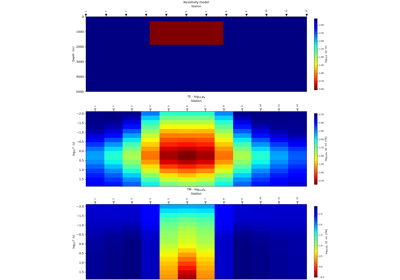
2-D forward models — finite-difference TE/TM pseudo-sections over conductive and resistive targets;
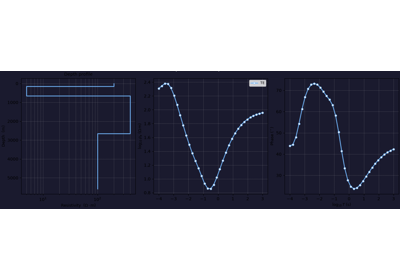
Plot styles and axis control — the same figures in publication and dark styles, and switching the period axis;
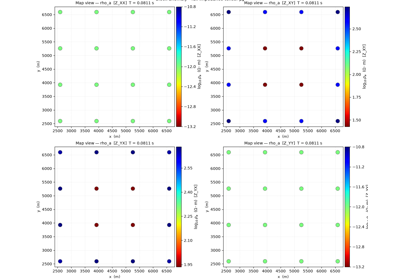
Quasi-3-D forward modelling — map views, pseudo-sections, and full impedance-tensor panels over a 3-D block anomaly.
Every model here is defined in the script itself, so each example is self-contained and runnable on its own. See the Forward modelling guide for the narrative reference.